Skip to content
AI College Prep Academy

The group ACT/SAT Bootcamp is not currently enrolling.

No cohort is scheduled and no seat is for sale. This page stays up because the method it describes is still how we work. What is running right now is founder-led college readiness coaching. If you are not sure what fits, tell us the situation and a person will route it.

Need test prep this year? The group bootcamp is not enrolling and no seat is for sale. What is running now is founder-led college readiness coaching, which handles testing milestones inside the retainer.

See coaching

ACT/SAT Bootcamp · 8 weeks · Inquiries open

Senior engineer-led · Live online small-group classes · 11 years private education · 80+ students placed at top universities

An online, 8-week SAT and ACT bootcamp: live small-group teaching, an AI literacy curriculum, and a study page your child writes and keeps.

Live expert teachers in small online cohorts. Serious preparation for the Digital SAT or current ACT — plus an AI literacy curriculum that teaches your child to study far more effectively and use AI ethically, which they keep using through AP exams, college essays, and freshman year of college. Humans first; AI as a tool we teach them to use well — never to cut corners.

High school student studying for the SAT at a wood desk with a laptop, a printed practice test, and a graphing calculator — soft natural light, focused expression

Why this is different

Two ways most families lose right now. We close both gaps in eight weeks.

Legacy SAT and ACT bootcamps put your child in a class of fifteen-plus with a curriculum that has not meaningfully changed in twenty years. The new wave of AI study apps — free Gemini, ChatGPT subscriptions, every venture-backed AI tutoring product — gives your child a tool but never teaches them how to use it well. We rebuilt the bootcamp around what families actually need: senior expert instructors leading small-group classrooms, plus an AI literacy curriculum that compounds across AP exams, college essays, and freshman year of college.

Real instructors who know your child by name

Small-group instruction taught by specialist teachers across math, reading and writing, English, science, and test strategy. Every student in the cohort is known by name and progress pattern. The instructor is the foundation; AI is the leverage — never the substitute. Humans first is not a slogan, it is how the eight weeks are scheduled.

vs. legacy bootcamps with classes of fifteen-plus

AI literacy that compounds past the SAT

Every student is taught how to use AI for academic work the way working engineers, lawyers, and researchers actually use it — responsibly, critically, and as a tool that makes them faster, not lazier. The same fluency that lifts SAT prep also lifts AP exams, college essays, college coursework, and the first jobs that follow.

vs. AI apps that hand over a tool with no instructions

A study system your child builds and keeps

Inside the literacy curriculum, every student builds their own study system in week one — an error log, a profile of the gaps they keep hitting, and written instructions for how they want to be helped. Those files get supplied to the AI at the start of each session, so practice targets the exact gaps, and the student keeps them after the bootcamp ends — through retakes, AP exams, and college applications. One tool inside the curriculum, not the whole pitch.

vs. a blank chatbot, where nothing carries over and nothing is inspectable

Tools and skills your child keeps for years

When the eight weeks finish, your child keeps the AI literacy framework, the study file they built, and the meta-skill of getting AI to explain things the way they learn best. You are paying for a study system that compounds for years, not a packet of drills they forget by Friday.

vs. eight weeks of value, gone when the bootcamp ends

Prefer 1:1 with your own coach?

We also run a 1:1 monthly program — for families who want daily practice + the founder’s direct time, not a group cohort.

Same engineer behind the curriculum. Same 80+-placements track record. Different format — recurring monthly with a personalized AI study tool tuned to your child plus monthly strategy time with Peter directly. Bootcamp and 1:1 are complementary; families pick whichever format fits their schedule and learning style.

AI Literacy Curriculum

Six things your child learns about AI — that will pay off through AP exams, college essays, and freshman year of college.

AI literacy is a meta-skill. We teach it explicitly, alongside the SAT and ACT material, so your child finishes the bootcamp not just with a stronger score but with the working-professional habits of using AI ethically to learn faster, write better, and reason more carefully — never to cut corners or hand off the thinking. The same skills compound through every academic year that follows.

Prompting for explanations, not answers

How to ask AI questions that build your child's understanding — instead of doing the work for them. The single biggest difference between a student who learns from AI and one who hands their thinking off to it.

Practiced in every AI-tutor session, weeks two through eight.

Spotting AI hallucinations — especially on math and dates

AI confidently invents wrong answers. Your child learns the specific failure modes — silent math errors, fabricated citations, plausible-sounding dates — and the verification habits that catch them every time.

Demonstrated and rehearsed against real SAT and ACT prep examples.

Where AI help is fair use — and where it crosses into academic dishonesty

The line moves by school, by teacher, by assignment. Your child learns to recognize where the line is — and how to stay clearly on the right side of it on essays, problem sets, and college applications.

Framework adapts to your child's school policies and teacher norms.

Using AI for essays without losing your voice

Brainstorm, outline, and pressure-test a draft with AI — without letting it write for you. The college-essay rule: AI is for sharpening your voice, never replacing it.

Carries directly into the senior-year college essay process.

AI plus spaced repetition

How to use AI to resurface past mistakes at the intervals memory actually consolidates — three days, one week, two weeks. The method generalizes to any subject your child studies, not just the SAT.

Built into the bootcamp's mistake-tracking from week one.

When to trust AI and when to verify against official materials

Practice tests, scoring guides, AP rubrics, college admission requirements — your child learns which materials are authoritative and which are not, and the habit of always checking against the real source of truth.

Modeled the way senior engineers verify production code — habit, not exception.

One tool inside the literacy curriculum

The study file your child builds in week one, and keeps.

Every time a student opens Claude or ChatGPT it is, in effect, a substitute teacher: capable, but it has never met them, so the help comes out generic. Inside the AI literacy curriculum every student builds the fix in week one and keeps it. A written study page listing the questions they got wrong, the patterns underneath them, and how they want things explained. They supply it at the start of every session, so practice targets those exact gaps instead of generic drills. It works in whatever tool the family already uses, and no model is remembering anyone: the page is what carries over, and the student rewrites it as they go.

Knows exactly what your child struggles with

Every wrong answer your child gives — across every diagnostic, quiz, and full-length practice test — feeds into the AI tutor's memory. After two weeks the tutor has identified granular patterns no human tutor would catch this fast: compound-interest questions with quarterly compounding, inference questions in dense historical passages, function-graph transformations in reverse.

Built on AI memory and project features — the tutor accumulates a longitudinal model of your child specifically.

Practice questions made just for your child

Once the tutor knows the patterns your child keeps missing, it generates targeted practice questions matched to those exact patterns — not random drills from a fixed bank. Your child builds a personalized, effectively infinite practice library that attacks the specific gaps they keep falling into.

Generates new questions every session based on weakness patterns, calibrated to the question style of the Digital SAT and current ACT.

Teaches the way your child learns best

Each student trains the AI tutor on how they learn. Visual learners get diagram-heavy explanations and worked examples. Step-by-step learners get logical derivations. Conceptual learners get story-form explanations tying ideas to the real world. Over eight weeks the tutor gets better and better at explaining the way your child specifically processes information best.

The student is in charge of shaping how the tutor teaches — a meta-skill that pays off long after the SAT or ACT.

The student's study page

ACT/SAT Bootcamp · week one to long after

Working
  1. Week 1: the student writes it from their own diagnostic

  2. Records the mistakes they repeat and how they learn best

  3. Supplied at the start of each session, so practice hits those gaps

  4. Week 8: the bootcamp ends. The page stays.

  5. Still useful through retakes, AP exams, and college applications

Illustrative run. The study page every bootcamp student writes in week one and keeps. No model remembers the student; the page is what carries over.

The bootcamp week — in person or live online

One week of the program. The classroom changes — the files don’t.

Class is the anchor; the system runs all seven days. Flip the room and watch what changes — and what deliberately does not.

Cohort_Week_3.md · same files, either room

One program week — flip the room and watch what refuses to change

Same week, both rooms

Saturday · the anchor

Live online cohort — small group, cameras on, same instructors, joined from anywhere.

Instruction, timed work, and the week’s misses logged into the student’s own files before anyone leaves the call.

Leaves the call with:error-log.mdinstructions.mdchecklist.md
  • Sun

    20-minute block

    Six practice items generated from the student’s own error log — not a generic worksheet.

  • Mon

    20-minute block

    Weakest pattern first; every miss goes back into the log.

  • Tue

    Timed mini-section

    Real conditions. Misses land in the log with a one-line why.

  • Wed

    20-minute block

    The verification habit: check the tool against the official explanation.

  • Thu

    Rewrite the instruction

    The student tunes how they want to be drilled — the skill itself.

  • Fri

    Instructor reads the files

    Same three files, before class — so Saturday starts from what actually happened, not “what did we cover?”

Flip the toggle again — the six weekday cards do not change. Remote families and in-person families run the same week on the same files; the only variable is the room the anchor class meets in.

Scripted demonstration of a sample week. The files are the continuity — no model knows or remembers the student between sessions.

The 8-week arc

Four phases that build the test-taker — and the AI tutor — together.

Most test prep starts at 'here are the question types.' We start earlier: structure, baseline diagnostics, and your child's AI tutor account. By the end of week eight, your child has both the score-prep work AND a personalized AI study agent they keep using for years.

    Weeks 1–2

    Foundation

    Test structure deep-dive (Digital SAT module timing or ACT section structure), a full-length baseline diagnostic, and the setup of each student’s personal AI tutor account. By the end of week two, your child has a tutor they can talk to.

    • Baseline diagnostic on an official-format full-length practice test
    • Personal AI tutor account set up and configured
    • Test-day mechanics: pacing, registration, allowed materials, accommodations process
    • Initial weakness areas documented in the AI tutor’s memory
    Weeks 3–4

    Pattern Recognition

    Granular weakness analysis. Instructors teach the question-type taxonomy in plain English; students teach their AI tutor to recognize and explain those patterns back to them. Practice volume increases.

    • Each student names their five biggest weakness patterns explicitly
    • AI tutor is trained to spot those patterns in a new question and walk through them
    • First mid-bootcamp full-length practice test under timed conditions
    • Spaced-repetition resurfacing of weeks 1–2 misses begins
    Weeks 5–6

    Deepening

    The AI tutor generates progressively harder targeted practice against each student's specific gaps. Students teach the AI tutor to explain in their learning style — visual, step-by-step, or conceptual — which makes the tutor a better teacher week after week.

    • Custom practice problem sets generated by the AI tutor every session
    • Students refine how the tutor explains: visual diagrams vs. derivations vs. story form
    • Section-specific test strategy: pacing rules, when to skip, when to guess strategically
    • Second mid-bootcamp full-length practice test — measurable progress on prior weaknesses
    Weeks 7–8

    Mastery

    Advanced AI tutor features: a running record of every mistake across the full eight weeks that the student re-supplies each session, custom rubrics for writing prompts, and personalized test-day playbooks. The final two weeks are about confidence, consistency, and a polished plan for test day.

    • Final full-length practice test in official conditions
    • Personal test-day playbook generated by the AI tutor
    • Plan for ongoing tutor use after the bootcamp ends — for retakes, AP exams, college apps
    • Parent showcase: students walk parents through what their AI tutor can now do

Choose your track

Parallel SAT and ACT cohorts. Same AI tutor framework. Different curriculum.

Families pick which test their child will focus on — or both, for students keeping their options open. The instruction is calibrated to each test's specific structure (the Digital SAT and the current ACT), but the AI tutor architecture, learning-style adaptation, and 24/7 support model are identical across tracks.

Digital SAT

Built around the current Digital SAT format — adaptive Reading & Writing module, Math module with built-in calculator, and the section-timing realities of the new test.

The Digital SAT changed how students should prepare. Adaptive module difficulty means second-module performance depends on first-module accuracy. Embedded calculators change which math shortcuts matter. We teach the test that students will actually sit for.

  • Adaptive-module strategy: how first-module pacing shapes second-module difficulty
  • Reading & Writing question taxonomy with AI-tutor pattern memory
  • Math section: when to use the embedded calculator, when not to
  • Section-by-section pacing built around real test-day conditions

ACT

Built around the four ACT sections (English, Math, Reading, Science) plus optional Writing, with strategy calibrated to the ACT’s distinct timing pressure and question style.

The ACT rewards a different set of test-taking habits than the SAT. The Science section is really a data-interpretation section. The English section punishes overthinking. The ACT timing pressure is more aggressive. We teach the test on its own terms — not as 'the SAT with science.'

  • Section-by-section pacing for ACT’s tighter time limits
  • Science section taught as data interpretation, not biology recall
  • English section: grammar patterns and rhetorical-skill question types
  • Optional Writing section coaching for students who need a writing score

SAT and ACT

For students taking both tests, or keeping their options open during junior year — the AI tutor framework supports both tracks in parallel with full-length practice tests for each.

Some students benefit from preparing for both — different colleges weight them differently, and some students naturally perform better on one. The AI tutor handles both test architectures in parallel, with separate weakness-pattern memory per test so progress on one doesn't get tangled up with the other.

  • Parallel curriculum modules for both tests
  • Separate AI tutor memory streams per test — no cross-test confusion
  • Comparative diagnostics to surface which test plays to your child's strengths
  • Test selection conversation in week three with full-length-test data in hand

Format and delivery

Eight weeks of live, small-group classes — with a personal AI study tool running all week.

An eight-week intensive built so families get serious volume (real instructional hours, real practice tests, real strategy reps) without the per-hour cost of one-on-one tutoring. Classes run live online today. In-person small-group cohorts are planned for Glenview, IL, serving the North Shore and southern Lake County — we will publish the location and dates once the room is under contract, and not before. The personal AI study tool extends every class hour into the rest of the week, so your child keeps practicing between sessions.

A live class day

Each class day is a structured arc: live small-group subject instruction, a short break, a personal AI-tutor practice session, and test-strategy or full-length-test segments to close. Same expert instructors, same students, same AI tutor framework all eight weeks.

  • Two live subject blocks — Math, plus Reading & Writing (SAT) or English + Reading + Science (ACT)
  • Live small-group instruction — joined online from anywhere in the U.S.
  • Personal AI tutor practice session — every student, every day
  • Test strategy, mock-test segments, and individual coaching

Class composition

Small online cohorts so every student is known by name and progress pattern. We hit the ratios test-prep families actually want — not the lecture-hall class sizes that legacy bootcamps default to.

  • Small online cohorts — each built so students get real instructor attention
  • Multiple specialist instructors per cohort (math + verbal + test strategy)
  • Teaching assistants for AI tutor setup and live troubleshooting
  • Parent showcase in week eight — students demo their AI tutor to families
Small group of high school students at a long study table with laptops and printed practice tests, an instructor working with one student’s AI tutor on screen — bright daylit classroom

What students leave with

A study system that compounds — not a packet that expires.

Every student finishes the bootcamp with the same set of deliverables, anchored by an AI literacy framework that works for the SAT, AP exams, college essays, and freshman year of college, plus the study file your child builds and keeps.

An AI literacy framework that pays off for years

The six-part literacy curriculum — prompting for understanding, spotting hallucinations, fair-use vs. dishonesty, essay voice, spaced repetition, and source verification — used across AP exams, college essays, college coursework, and the first jobs that follow.

A study file they build and keep

A written record of the student's diagnostic history, weakness patterns, the practice they generated, and the explanations that actually worked. Readable, editable, and theirs to keep. It works in whatever AI tool the family already uses, and it outlasts any one of them.

Daily small-group expert instruction, all 8 weeks

Real instructor hours with specialist teachers across math, reading and writing (SAT) or English plus reading plus science (ACT), and test strategy — a higher instructional volume than the legacy bootcamp baseline.

Multiple full-length official-format practice tests

Diagnostic, mid-bootcamp, and final practice tests — every full-length test run under official conditions and analyzed by the AI tutor against each student's specific weakness patterns.

Honest fit check

Is the 8-week group bootcamp right for your family?

The bootcamp fits when

  • Your child does well with structure, a defined start/end, and a clear cohort rhythm.
  • You want a dense block of daily live instruction over a focused 8-week stretch — not month-to-month commitment.
  • Peer accountability and small-group dynamics help your child show up consistently.
  • You are planning ahead and can aim at a specific upcoming SAT or ACT date rather than starting immediately.

A better fit is the 1:1 monthly program when

  • Your child has a current-year test date and needs to start this month, not wait for the next cohort.
  • You want monthly 1:1 strategy time with the founder directly — not a group setting.
  • Your child has significant accommodations (504/IEP, test anxiety, ADHD diagnosis) that need fully personalized pacing and tooling.
  • Subject scope spans SAT + multiple APs, where the recurring program flexes month-to-month as milestones change.

Either way, the honest answer happens on the discovery call. The founder runs it personally and will tell you the wrong fit if the program is not right for your family.

Timeline and availability

Cohorts are timed to real test dates — not to our calendar.

Every cohort is built backward from an official SAT or ACT date, so the work lands when it counts. Enrollment for each window opens ahead of it, and a cohort runs only when it meets a written minimum enrollment — we would rather move a date than deliver a half-filled room.

    August 2026 – January 2027

    Parent AI workshops and fall test-prep coaching

    Free and low-cost parent workshops across the North Shore, alongside 1:1 coaching timed to the autumn SAT and ACT dates. This is the window where families meet the program in person before committing to a cohort.

    Inquiries open
    January – February 2027

    Winter small-group cohort · February 27 ACT and March 2027 SAT

    The first small-group cohort timed to a specific test date, for sophomores and juniors sitting the February ACT or the March SAT. Enrollment opens in the autumn; the cohort runs only if a written minimum enrollment is met.

    Enrollment opens autumn 2026
    Summer 2027

    Summer SAT/ACT bootcamp and AP intensives

    The eight-week summer program for rising juniors and seniors, plus subject intensives for AP coursework. Enrollment opens in the winter, after the first cohort has been delivered and families can see the work rather than a description of it.

    Waitlist open

Who is teaching this

Built by an engineer who ships production AI for a living.

Jinwoong Lee — a 2018 UC Berkeley graduate — is a senior software engineer with eight years of experience building production software at companies that include Amazon and Ring. He has also founded and shipped AI software that helps small care facilities replace paper-based workflows — built for owners who aren’t technical, in a privacy-regulated healthcare environment. That combination — production AI engineering plus a track record of teaching non-technical users to actually adopt AI — is rare in test prep, and it’s the foundation the AI-tutor curriculum is built on.

8 years of production software engineering

Companies that include Amazon and Ring. Currently a senior software engineer. The same engineer who builds AI systems at work designs the AI tutor architecture students train in the bootcamp.

Ships AI to non-technical users in a regulated industry

Founded and ships AI-assisted software for small care facilities operating under strict healthcare-privacy rules. Building AI that non-engineers actually use is exactly what the bootcamp teaches students to do.

11 years of private education practice · 80+ students placed

Eleven years coaching students from his own private practice; mentees placed at Harvard, Stanford, Princeton, Columbia, Brown, Dartmouth, Cornell, UC Berkeley, UCLA, Northwestern, Georgia Tech, and other top-twenty universities. The teaching style in the bootcamp is the same one those placements were built on.

The combination is the point

Most test prep founders are educators who have never built AI. Most AI engineers have never taught a teenager. The ACT/SAT Bootcamp curriculum exists because one person sits at both tables — and that combination is what makes a working personal AI tutor for every student possible.

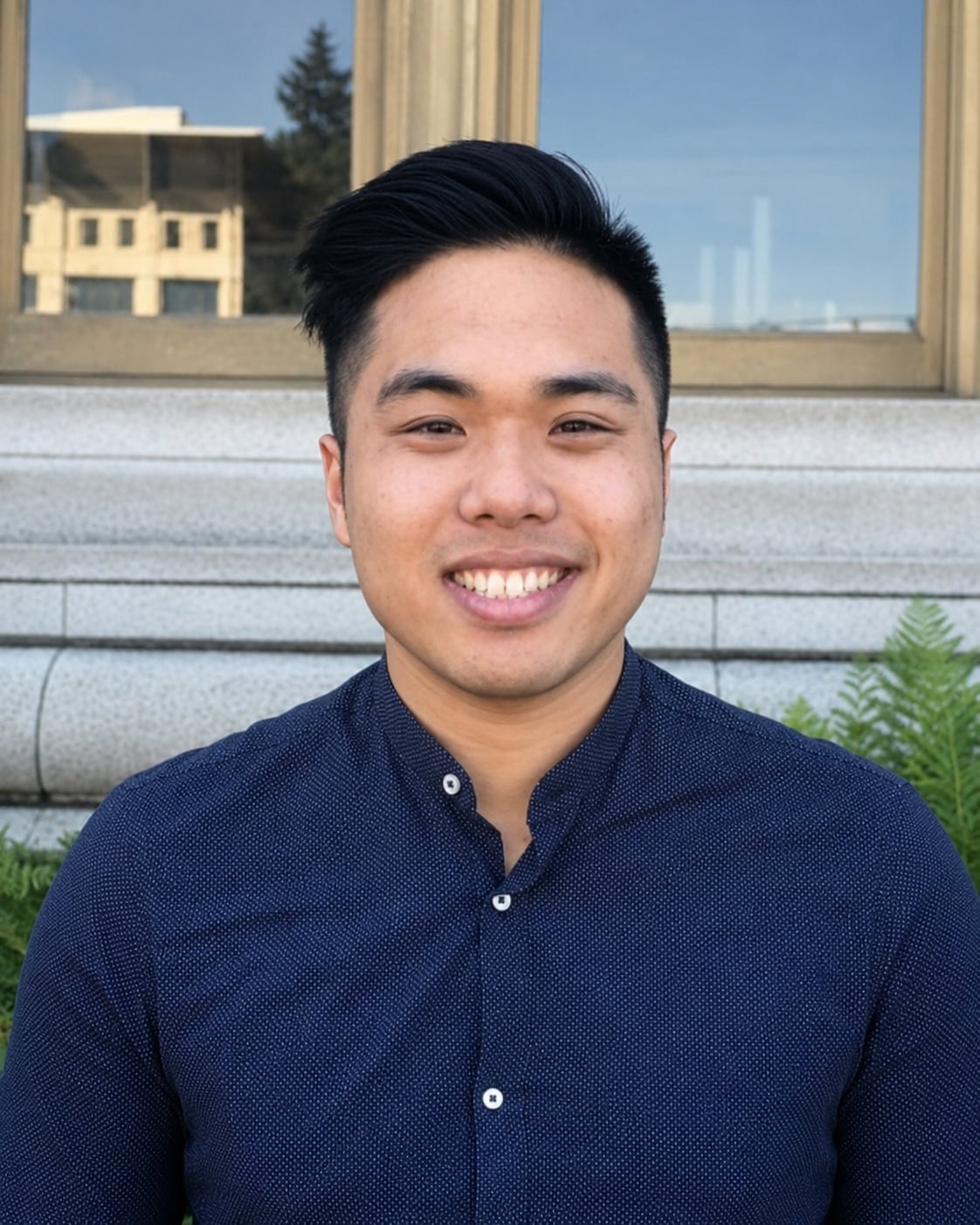
Portrait of Jinwoong Lee, founder of AI College Prep Academy — senior software engineer with eight years of production software experience.

FAQ

Common questions from families.

Inquiries open · Live online now · Glenview, IL in-person planned

Give your child the SAT — and the AI literacy they will use through AP exams, college essays, and freshman year of college.

Tell us which test date you are aiming at and we will tell you which cohort fits, or say plainly that a different format suits your family better. Founding-Cohort families help shape the curriculum and receive the first round of personalized literacy reports. We get back to families within two business days.